







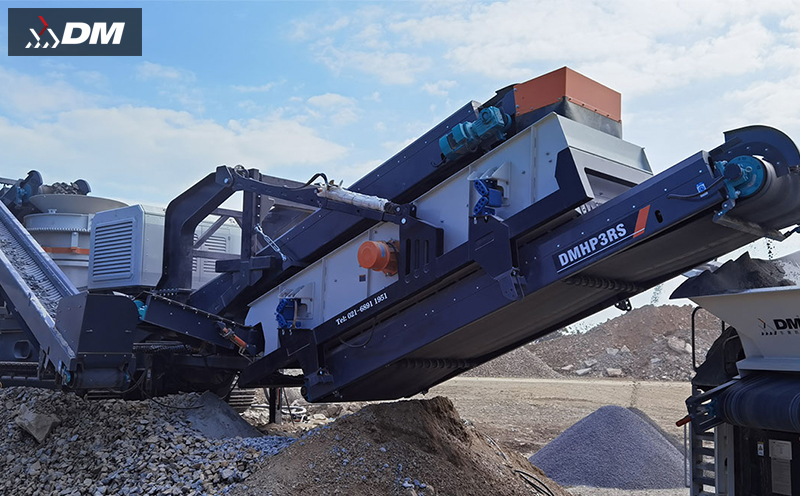
I. The "Cost Dilemma" in PNG Highland Mining Areas: Production Pressure That Traditional Equipment Can Hardly Bear
Core mining areas such as PNG's Highlands Province and Enga Province have become focuses of resource development due to their high-quality gold and copper deposits. However, the natural and geographical conditions here have pushed the cost of crushing operations to a high level. Most highland mining areas are located at an altitude of over 1,500 meters, with a day-night temperature difference of 20°C and a rainy season lasting 7 months. Muddy mountain roads and frequent equipment failures form a "dual cost squeeze": the monthly failure rate of traditional crushers exceeds 60%, and each shutdown for maintenance requires waiting for parts to be transported from Port Moresby, the capital, which takes 10-15 days, directly causing production interruptions. Low availability has forced enterprises to deploy additional backup equipment, and coupled with hidden costs such as labor and fuel, the crushing cost per ton of ore generally exceeds 300 Kina, becoming a key bottleneck restricting mining area profitability.
Operational data of a mining company in 2022 shows that 3 traditional crushers used in a gold mine in the Highlands Province had a total shutdown of 182 days throughout the year, with maintenance costs exceeding 1.2 million Kina. The crushing cost per ton of ore reached 328 Kina, and the company was eventually forced to reduce mining scale due to high costs. This case confirms that in PNG's highland mining areas, the "reliability" of equipment is far more decisive for the cost baseline than "crushing speed".
II. Core Breakthrough: Dual Guarantee of Ultra-High Availability and Low Failure Rate
Our rugged crushers, specially built for PNG's highland mining areas, take "stable operation" as the core design goal. Through hardware upgrades and structural optimization, they fundamentally reduce failure risks, increase operating hours, and directly achieve cost control. Their key advantages are reflected in two major dimensions:
1. 90%+ Ultra-High Availability: Sustained Release of Production Capacity
The equipment adopts an "adaptable" design to cope with complex working conditions in highlands: The crawler-mounted mobile station supports a hybrid diesel-electric dual-power mode. In fixed operation scenarios where municipal electricity is available in the mining area, it can switch to electric drive, which not only reduces energy costs by more than 40% but also reduces engine operation wear. In transfer or temporary operation scenarios without municipal electricity coverage, it automatically switches to diesel drive. Coupled with a reinforced crawler travel system (ground pressure of only 0.07 MPa) and an automatic mud-cleaning device, it can move freely in muddy mining areas with 35% water content, increasing transfer efficiency by 40%. The core power unit uses a plateau-specific engine, which can maintain 95% of the rated power at an altitude of 2,000 meters, avoiding production capacity attenuation caused by oxygen deficiency. In a field test at a copper mine in the Highlands Province, the equipment achieved an average monthly effective operating time of 250 hours, with availability stably at 92%, an increase of 108% compared with the 120 hours of traditional equipment, completely filling the production capacity gap.
2. Low Failure Rate Below 5%: Minimizing Maintenance Costs
Targeting the pain points of difficult and costly maintenance in highland mining areas, the equipment reduces failure probability from the design stage: the main structure uses Q960 high-strength steel, with impact resistance 60% higher than ordinary steel, capable of withstanding falling rocks and vibration impacts in mining areas; the hydraulic system adopts an integrated modular design, reducing exposed pipelines by 80% and lowering leakage failure rate by 90%; the electrical system uses IP67 waterproof and dustproof design, paired with a constant temperature heat dissipation device, resulting in a circuit failure rate of less than 2% in high-humidity and dusty environments. More importantly, the equipment is equipped with an intelligent early warning system that can predict problems such as overheating bearings and worn liners 24 hours in advance, enabling "preventive maintenance". Data shows that the annual average maintenance frequency of the equipment is only 3 times, and maintenance costs are 75% lower than traditional equipment, completely ending the passive situation of "shutting down waiting for parts".
III. Cost Revolution: Practical Transformation from "High Consumption" to "Low Cost"
In 2023, a Chinese-funded mining enterprise replaced the original traditional equipment with 6 of our rugged crushers (crawler-mounted hybrid mobile stations) in the highland gold mine project in Enga Province, PNG. The annual operational data underwent subversive changes, directly driving a significant reduction in the crushing cost per ton of ore:
- Equipment availability increased from 45% to 91%, annual crushed ore volume rose from 800,000 tons to 1.8 million tons, and unit fixed cost was diluted by 44%;
- Annual average maintenance cost decreased from 900,000 Kina to 220,000 Kina, and maintenance cost per ton dropped from 1.13 Kina to 0.12 Kina;
- Lost work costs caused by failure shutdowns decreased from 680,000 Kina to zero; under the hybrid diesel-electric mode, energy costs were 38% lower than pure diesel drive, and energy cost per ton was reduced by 45 Kina;
- Comprehensive calculation shows that the crushing cost per ton of ore decreased from 315 Kina to 210 Kina, with annual cost savings of over 180 million Kina for a single project.
The financial director of the project stated: "The profit margin in highland mining areas entirely depends on the 'operation' of equipment. The hybrid diesel-electric dual-power design and high reliability of these crushers have transformed our cost control from 'passive loss prevention' to 'active profit making'."
IV. Adapting to Highland Mining Areas: Equipment Selection and Cost Optimization Guide
To maximize cost reduction in PNG's highland mining areas, it is necessary to properly configure equipment and manage operations based on specific scenarios:
1. Precise Selection to Adapt to Highland Working Conditions
- Large mining areas in deep mountainous regions (with municipal electricity access): Prioritize crawler-mounted hybrid diesel-electric dual-power double-chamber crushers. Enable municipal electricity drive to reduce costs during fixed operations, and switch to diesel drive during transfers to ensure flexibility;
- Small plateau mining sites (without stable municipal electricity): Select compact crawler-mounted hybrid diesel-electric crushers, paired with small diesel generators for backup, to meet short-distance transfer and emergency operation needs;
- Rainy season-dominated areas: Choose hybrid diesel-electric models with enhanced sealing and automatic drainage functions, focusing on protecting the electric drive module to avoid failure losses caused by humidity.
2. Operational Management Cost Reduction Tips
- Establish equipment health records: Rely on intelligent systems to record diesel-electric switching frequency and power module operation data, and formulate personalized maintenance plans to avoid over-maintenance;
- Localized spare parts reserves: Establish a spare parts warehouse near the mining area, focusing on storing electric drive module components, liners, seals, etc., to shorten maintenance response time;
- Energy cost control: Plan operation modes based on the stability of municipal electricity supply. Prioritize electric drive when municipal electricity is normal, and only use diesel during power outages or transfers to minimize energy expenditure.
Conclusion
The resource value of PNG's highland mining areas is undoubted, but the high-cost dilemma once made many enterprises hesitate. Our rugged crushers (crawler-mounted hybrid diesel-electric mobile stations) break the limitation of energy costs with "diesel-electric dual-power adapting to diverse scenarios", release production capacity potential with "ultra-high availability", and cut off ineffective consumption with "low failure rate", fundamentally reconstructing the cost structure of the crushing link. In copper mines in the Highlands Province and gold mines in Enga Province, this set of equipment is proving with solid cost data that conquering highland mining areas does not require compromise between "high cost" and "high production capacity". Choosing the right equipment can turn crushing operations in extreme environments into a core link of stable profitability, injecting strong impetus into enterprises' resource development in PNG's highlands.
If you would like to get help immediately, you can also fill your requirements on the following form, we will contact you on the right time.


Get In Touch